Donald Trump Childhood NYC Home Sells For Nearly 2 Million After Extreme Makeover

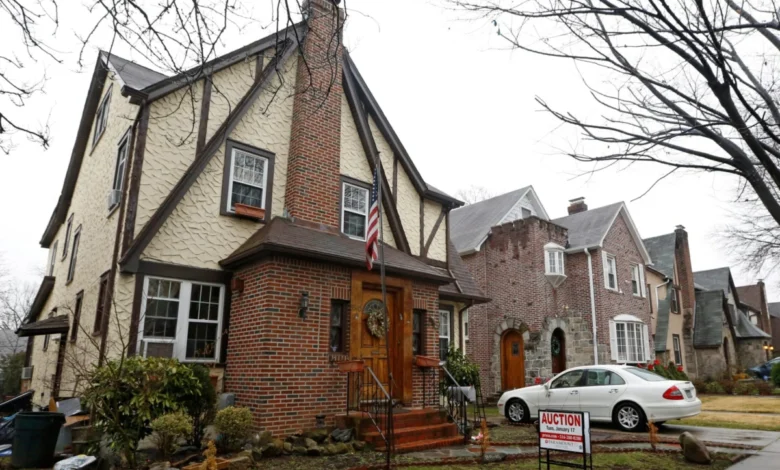
The childhood home of Donald Trump in Queens, New York, has officially found a new buyer, fetching a final sale price of $1.93 million. This transaction closes the latest chapter for a distinctive Tudor-style residence that has transitioned from a modest family starting point to a political novelty, and ultimately, to a thoroughly modernized luxury home. Public real estate records confirmed the completion of the sale following a contract signing earlier in the summer, capping off a remarkable physical and market transformation for the property.
Originally constructed in 1940 by the president’s father, prominent real estate developer Fred Trump, the house served as the early domestic environment for the future commander-in-chief until he reached the age of four. Situated within the affluent, tree-lined neighborhood of Jamaica Estates, the property stands as a physical artifact from the nascent stages of the Trump family real estate empire. Over the decades, however, the home’s connection to the prominent family spurred a volatile trajectory of ownership changes, speculative pricing, and significant physical decay before its most recent rescue.
From Feral Cats to Luxury Living
The path to the recent $1.93 million sale was anything but straightforward. Prior to the overhaul, the five-bedroom, three-bathroom residence had fallen into a state of severe neglect. Years of vacancy, exacerbated by a burst water pipe that caused extensive water damage and unchecked mold growth, left the historic structure compromised. Compounding the structural issues, the property reportedly became overrun by a colony of feral cats, reducing a once-pristine suburban home to a dilapidated shell.
Enter Tommy Lin, a real estate developer who recognized the underlying value and historical curiosity of the address. Lin acquired the neglected property for $835,000, initiating a rescue mission that required considerable capital and vision. Over an intensive eight-month interior renovation period, Lin poured an estimated $500,000 into the structure.
The extensive overhaul completely eradicated the mold and structural decay, replacing them with high-end modern amenities designed to appeal to contemporary luxury buyers. The renovated interior now boasts a state-of-the-art chef’s kitchen equipped with premium appliances, sophisticated herringbone wood floors, and spa-like bathrooms that contrast sharply with the home’s mid-century origins. These modern touches successfully erased the years of damage, positioning the property as a competitive, turnkey offering in the Queens housing market.
A Chronology of Speculation and Ownership
The Jamaica Estates property has experienced a fluctuating market history, particularly following Donald Trump’s entry into national politics. The family of the developer did not retain ownership of the house for long after his early childhood, and the address passed through several hands before capturing broader public attention during the 2016 presidential election cycle.
In March 2017, just months after Trump assumed the presidency, the house sold at auction for $2.14 million to an anonymous buyer operating through an entity named Trump Birth Home LLC. Recognizing the unique marketing angle provided by the commander-in-chief, the new owners briefly transformed the property into a short-term rental listed on Airbnb. Guests staying at the home were greeted by distinct interior staging, which included copies of a life-sized cardboard cutout of Donald Trump, volumes of his bestselling book “The Art of the Deal,” and a framed People magazine cover featuring his likeness.
The novelty venture was short-lived. By 2019, the property returned to the open market with an ambitious asking price of $2.9 million, capitalizing on the peak of political curiosity surrounding the president. However, the high price tag deterred prospective buyers, and the home lingered unsold, eventually sliding into the aforementioned state of disrepair, water damage, and feline infestation before Lin acquired it in 2023.
Market Implications and Neighborhood Context
The final sale price of $1.93 million reflects both the premium associated with a thorough, high-end renovation and the unique historical cachet of the address. Jamaica Estates is known for its architectural diversity, featuring stately Tudor, colonial, and Mediterranean-style homes that generally command robust prices within the Queens borough.
Real estate analysts note that properties with celebrity or historical ties often experience a bifurcated market. While political associations can initially inflate speculative values—as seen in the 2017 and 2019 valuation attempts—the long-term marketability of such homes ultimately relies on fundamental real estate metrics: location, structural integrity, and modern updates. Lin’s strategy of stripping away the overtly political novelty staging in favor of a neutral, high-end luxury renovation proved crucial in securing a stable buyer at a competitive price point.
The broader implications of the sale point to a maturing market for homes tied to modern political figures. As the initial frenzy surrounding the Trump presidency settles into a permanent historical record, properties associated with his formative years are being judged more strictly on their merits as residential investments rather than political shrines.
Broader Context of Real Estate and Aesthetic Legacy
The trajectory of the Jamaica Estates home mirrors, on a micro scale, the broader real estate philosophy that defined the Trump family business. Donald Trump parlayed his early lessons under his father, Fred Trump, into a multi-billion-dollar real estate empire centered around high-profile Manhattan developments, most notably the iconic namesake Trump Tower. For decades, that Fifth Avenue skyscraper served as his primary residence and the operational headquarters for his global brand.
Even while serving in public office, the aesthetic choices favored by the president have frequently reflected the bold, opulent design markers established during his decades as a real estate developer. Observers of executive branch renovations have noted consistent efforts to incorporate grand architectural features and distinct decorative choices, such as gold-plated fixtures and elaborate interior styling, echoing the hallmark aesthetic of his commercial and residential properties.
The transformation of the modest Queens Tudor home into a modern luxury asset ultimately underscores the dual nature of the property: it remains both a traditional suburban house built during the post-war housing boom and a tangible monument to the early beginnings of one of the most polarizing figures in modern American history. With the recent sale complete and the extensive renovations locked in, the house enters a new era, far removed from its days as a vacant, cat-ridden relic, yet forever tethered to the legacy of the man who took his first steps within its walls.